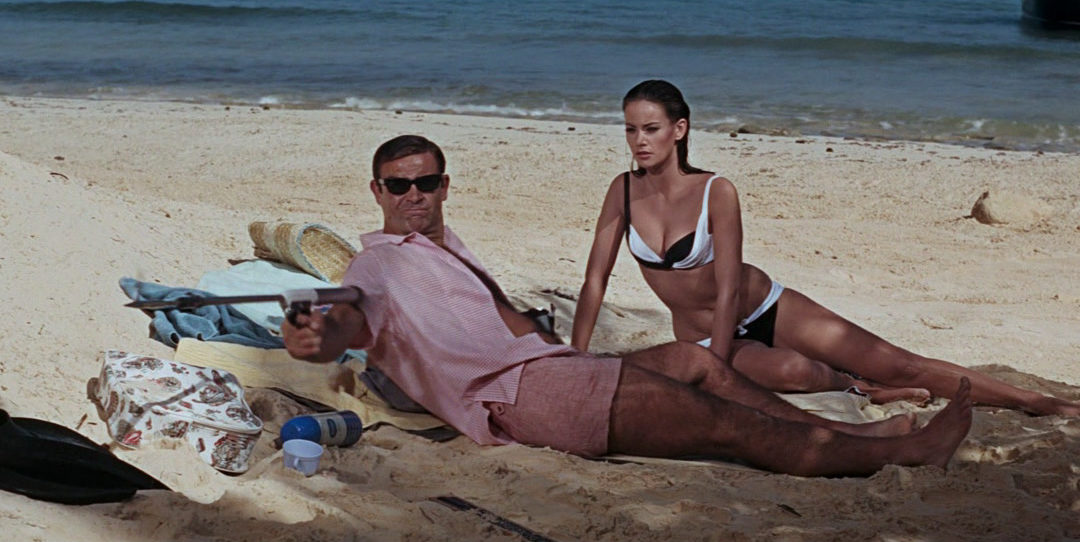
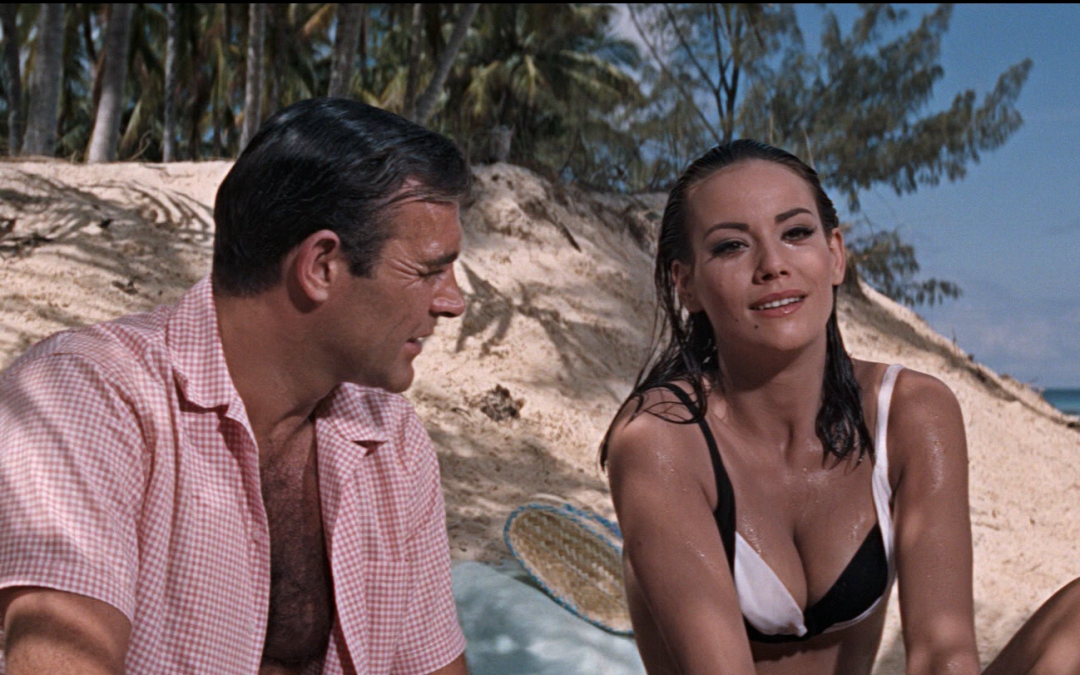
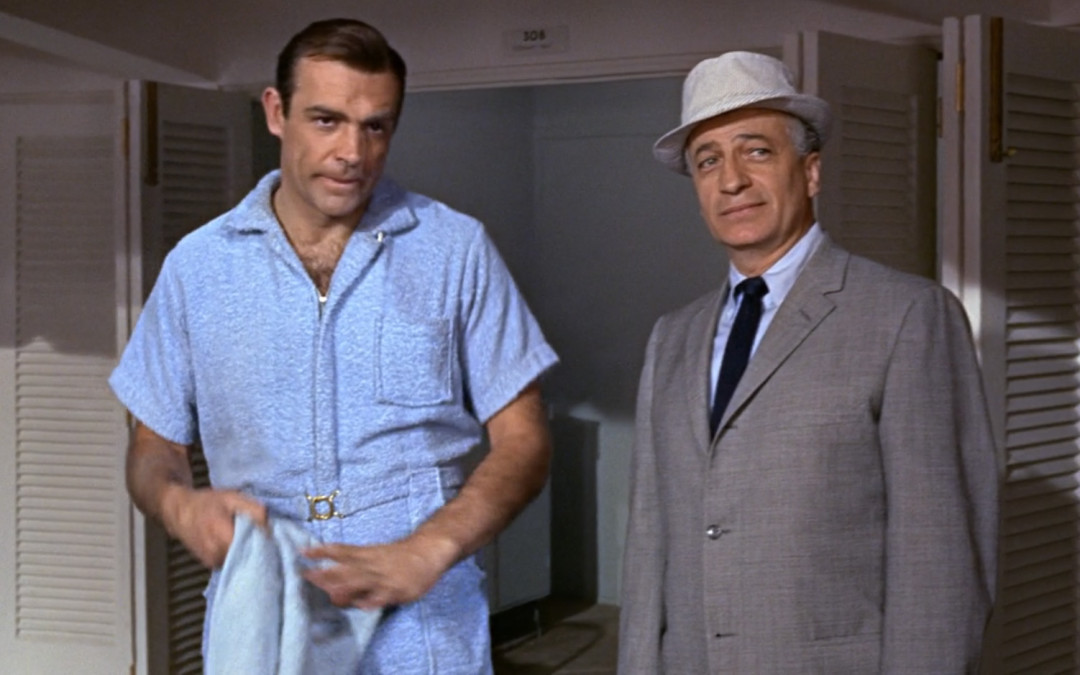
The Story of a Shy Kid and James Bond 007 in Thunderball
by Andy Ross (@ThatAndyRoss)
The time: Summer 1991. The place: Gatlinburg, Tennessee. The age: Six years old. I do none of this to make anyone feel old reading this, simply to establish the time and circumstances I first met 007. My grandfather had been diagnosed with lung cancer sometime earlier – he didn’t smoke – but it was lung cancer. There are flashes in my mind of us, my mother, father, and I, driving to Ohio for his treatments. The treatments had happened earlier, but again, I can’t quite place when.
This is what led us to Gatlinburg. Gatlinburg is a popular resort town in East Tennessee, only a short drive away from the Disneyland of Tennessee, Dollywood. My grandfather’s cancer was in remission, and it was decided that a fantastic vacation would be had. An entire week, in rented condos. My family with our own condo, and my grandparents in one of their own as well. A stairwell connected the two, and I remember walking between the two listening to my jam of the summer, Amy Grant’s “Baby Baby” on a portable cassette player. (more…)
This essay on Thunderball is the 4th in a 24-part series about the James Bond cinemas. I encourage everyone to comment and join in on an extended conversation about not only the films themselves, but cinematic trends, political and other external influences on the series’ tone and direction.
Of [In]human #Bond_age_ #4: Thunderball: James Bond, D.W. Griffith and Spectacle
by James David Patrick
Contrary to popular belief, George Lucas didn’t invent the blockbuster event movie; Star Wars merely renewed (perhaps perfected) the novelty of movies as the grand spectacle.
Go further back than the biblical epics and the Cinemascope wonders of the 1950s and 60s. Ben-Hur, Ten Commandments, and Lawrence of Arabia. Go as far back as D.W. Griffith’s silent masterpiece Intolerance, the 210-minute, four-storyline silent epic that spans approximately 2,500 years. The lavish period film required sets of unprecedented scale and more than 3,000 extras. Intolerance reportedly (exact figures are unknown) cost more than $2 million dollars in 1916. I don’t need to do the math to tell you that that was an unprecedented sum of money. Griffith’s prior film, the controversial TheBirth of a Nation, had been a huge box office success (though exact totals are impossible to know). The film’s lead actress, Lillian Gish, reportedly once remarked (I can find no official verification of this quote) in an interview: “They lost track of the money it made.” Birth earned the distinction of being both the first true feature-length American film and the first “blockbuster.”
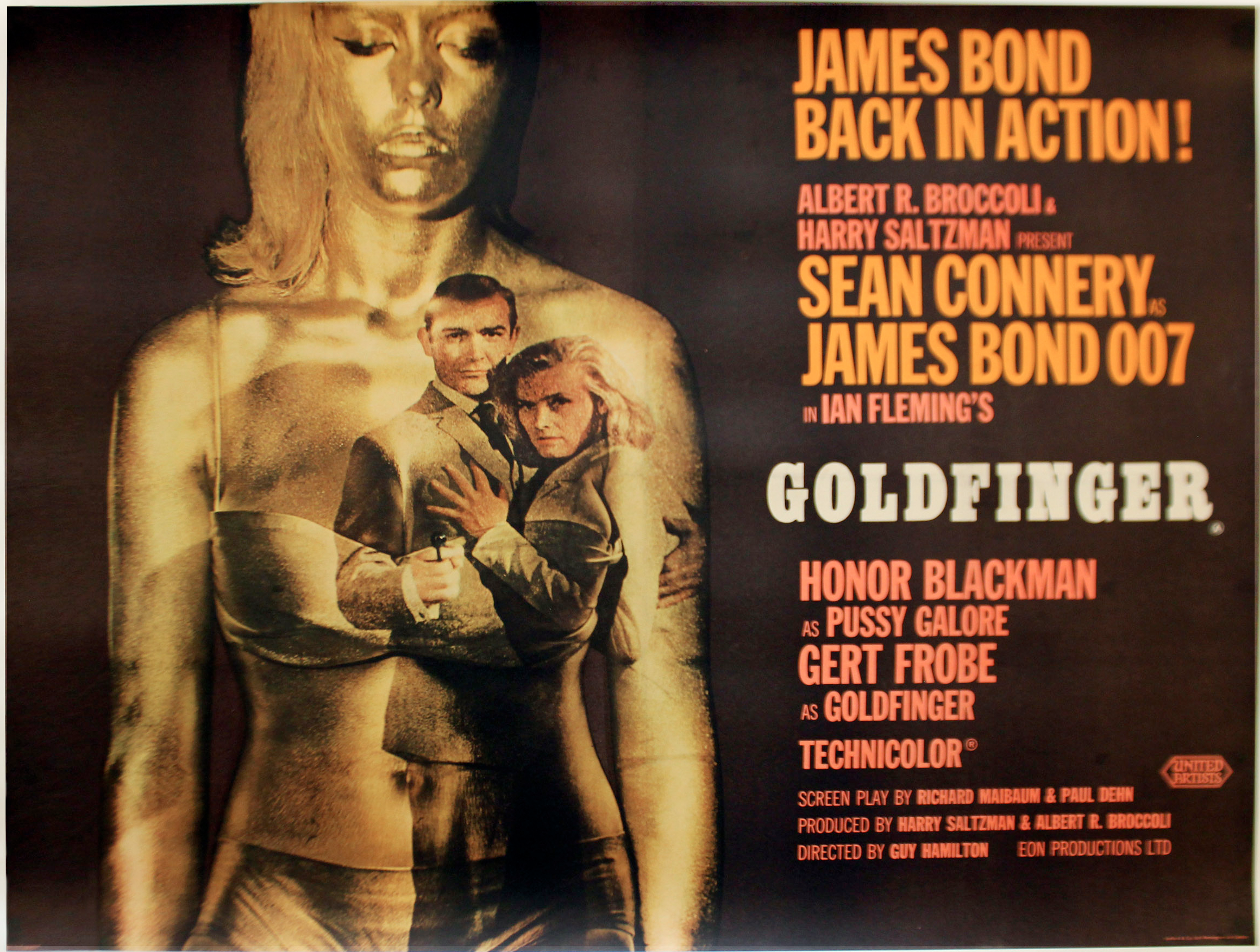
This essay on Goldfinger is the 3rd in a 24-part series about the James Bond cinemas. I encourage everyone to comment and join in on an extended conversation about not only the films themselves, but cinematic trends, political and other external influences on the series’ tone and direction.
Of [In]human #Bond_age_ #3: Goldfinger, Subtext and the Rape of Pussy Galore
by James David Patrick
The following essay intends to discuss the cinematic subtext and potential cultural factors that may have influenced the creation of the “barn scene” in Goldfinger. It is not meant to undermine the real horror that many women have had to overcome as a result of rape or sexual assault. I hope to treat the topic with sensitivity but still allow for a clinical but frank discussion about how or why the way we view this scene has changed in the nearly 50 years since its release.
James Bond confronts Pussy Galore (played by Honor Blackman) in a barn. His aim, of course, is to have a figurative and literal roll in the hay. She is reluctant. She flips him. He flips her. It is aggressive yet supposedly playful courting, punctuated by a Mickey-Moused score (just in case you didn’t grasp the supposed innocence of it all), the stubbornness of James Bond’s womanizing and Pussy Galore’s shield of chaste cynicism (a chastity we presume to be false), mano a femano. With both of them on the ground, he forces a kiss. She struggles beneath him before, inevitably, giving in and returning his embrace.
When the Best Really Is the Best by Cameron Bowman (@festivallawyer)
It’s rare when something is the consensus “best” of something and it actually IS. I mean, I love the Doors, but “Light My Fire” is probably my least favorite song of theirs. In fact, my personality is such that when everyone thinks something is the best I am usually the guy saying, “nah my favorite is___(insert unpopular opinion here) ”
That’s why it’s nice when popular opinion and the critics agree with what is personally my favorite. Not only is Goldfinger my favorite Bond movie, I think I can make a convincing case that Goldfinger is also the BEST Bond movie. (more…)
Technical difficulties have temporarily derailed the #FRwL Live Tweet Digest but not so with the #GOLDFINGER tweets. Read on as we delight in the ways that Sean Connery says “PUSHY.”
So much PUSSY you won’t know which way is up! INITIATE MISSION! #Goldfinger