The encore presentation of On Her Majesty’s Secret Service still brought out the same good-natured lovefest we’ve come to expect. OHMSS has become a #Bond_age_ favorite; it’s easy to see why. Kitschy 60’s/70’s decor and costumes, Emma Peel, Telly Blofeld and Playboy’s one and only hurrah make for an energized evening of witticisms and reverence.
INITIATE THE ON HER MAJESTY’S SECRET SERVICE LIVE TWEET DIGEST: FINALS EDITION
This is the 23rd essay in a 23-part series about the James Bond cinemas. I encourage everyone to read the other essays, comment and join in on the conversation about not only the films themselves, but cinematic trends, political and other external influences on the series’ tone and direction.
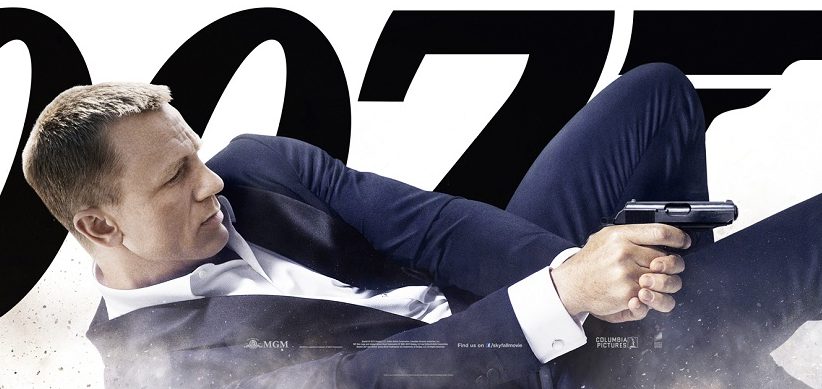
Of [In]human #Bond_age_ #23: Skyfall and the Deconstruction of James Bond
Charles Darwin once said, “It’s not the strongest or the most intelligent who survive but those who can best manage change.” Malleability permits longevity. In order to survive, a species… or character must adapt.
I’ve discussed James Bond, Batman and Sherlock Holmes at some length as legendary protagonists that have endured multiple iterations over the course of generations. Born of literary roots, all would go on to experience sustained success in print, film and/or television. Bond, Batman and Sherlock share a tremendous amount of DNA but nothing more strongly perhaps than their persistent pop-culture relevance.
Sir Arthur Conan Doyle blessed his Sherlock character with rich character flaws such as serial pomposity, drug addiction and a latent distrust of women. These are timeless traits that have allowed Sherlock Holmes to be a pompous but typically affable wiseass. These flaws make him human and relatable. Though he will always be the smartest man in the room, stoic and calculating, he succumbs to fear and insecurity like anyone else. Perhaps as a result, Sherlock Holmes’ feats of mental dexterity connect with broad audiences whether smugly played by Basil Rathbone or smugly played by Johnny Lee Miller.
The character of Batman, however, is built of symbols and a backstory. The Batman logo, the batsuit, the bat signal, the Batmobile. The actor playing Batman is often obscured behind costumes and custom vehicles. In Tim Burton’s Batman (1989), Michael Keaton spends 22% of the entire film (not just Bruce Wayne/Batman screentime) inside the batsuit/Batmobile/Batwing. The average for all subsequent Batman films hovers just shy of 20%. The question of character for Batman then revolves around his much rehashed origin story of childhood trauma and recovery. Bruce Wayne is Batman because he witnessed the murder of his parents. Batman longs to rid Gotham of the criminal elements that orphaned him at the age of eight.
Bond, like Batman, also boasts a collection of iconic, albeit inconsistent, suits and gadgetry at his disposal, the Aston Martin, the Walther PPK and general Q Branch gizmos. None prove nearly as identifiable as the assorted bat menagerie. Bond’s style and weaponry changes with the times… and with guaranteed promotional dollars. That EON has financed Bond independently made the franchise more reliant upon branding and promotion to pay the bills. Tomorrow Never Dies, in fact, became the first film in history to be completely financed through sponsored product placement and promotion.
I Know How to Hurt: The World is Not Enough and James Bond’s Shaky Ethics
by Steve Sandberg
In discussions of the James Bond franchise, The World is Not Enough is rarely even acknowledged, and when it is, the talk isn’t usually positive. Treated as more forgettable than an outright disaster, Pierce Brosnan’s third outing as 007, in which his attempts to protect an oil heiress from a deranged anarchist are thwarted by the devious damsel herself, just doesn’t get much respect. I’ve had a rough relationship with TWiNE. I even despised it for a long time, but I’ve come to not only love it, but also believe it’s the most fascinating Bond film of the Brosnan era. I wouldn’t argue too stubbornly with anyone who doesn’t like the movie (as the flaws remain glaring) and few things are more subjective than the quality of individual Bond movies, but I will fiercely defend this film from any Bond fan who deems it an unimportant part of the series.
I believe the popular opinion of Brosnan is that he was a great Bond stuck in mostly mediocre movies. I can’t agree with that perspective, but I can certainly understand it. His embodiment of 007 is his own, but there’s something of an amalgamation of all previous versions of the character in it; he has Connery’s suaveness, Dalton’s harsher edges, Moore’s gift for making the most of bad puns. And like the way his performance somewhat encompassed all that came before, his movies were similar in how they spanned the franchise’s entire spectrum of quality. In just four films, Brosnan’s work reached masterful heights, embarrassing lows, and everything in between. That’s a badge of inconsistency to be worn with pride. In The World is Not Enough, his career hit all of these levels in one single movie.
My first instinct is to discuss the biggest complaint everyone has with TWiNE: Dr. Christmas Jones. I get it, Denise Richards is not a believable atomic physicist, and I wouldn’t trust her to defuse a nuclear bomb any more than I’d trust Bond not to make awful jokes about her inexplicable name. Despite that, I think she’s a lot of fun in the role, giving Bond guff about his Russian cover and attempting to chit-chat about his sex life, which is obviously ludicrously impressive. Many viewers find her insufferable, and that’s cool. She’s not that big of a component of the movie, anyway. TWiNE is all about Elektra King.
Where Dr. Christmas Jones is an average, disposable Bond girl, Elektra King is anything but. The oil heiress central to the film’s plot is not only the Bond franchise’s sole main female villain, as James David Patrick points out in his #Bond_age_ essay “The Tragedy of The World is Not Enough,” but also one of the most interesting, fully-developed female characters of the whole series. King is a tragic villain who subverts expectations, disguising herself as a damsel in distress while manipulating both Bond and her anarchist lover Renard as a means of coping with her bungled rescue years earlier.
Electra and Renard’s relationship supplies TWiNE‘s central theme: the idea of living without fear of death, or its consequences. Renard, with a bullet lodged in his brain, could die at any moment. I don’t know how medically accurate this scenario is, but it makes for a great bad guy. He feels no pain, and does not dread his imminent demise. By acknowledging his own certain death, he becomes more powerful. His philosophy rubs off on Electra, who was kidnapped, traumatized, and changed forever by Renard at a young age. She repeats his mantra (or is he repeating hers?) “There’s no point in living if you can’t feel alive.” This freedom from the nagging burden of mortality allows Electra and Renard to pursue their goals quite effectively, but all their acknowledgment and philosophizing can’t change the inevitable. Their plans are just as doomed as their Stockholm-y relationship, and the only thing the two villains achieve for their grand efforts is the death they refused to fear.
All this Fearless-ness makes me think about our hero, and how he views his life. Does James Bond fear death? For all TWiNE does in attempts to physically humanize him – a shoulder injury sustained early in the film becomes an easily exploitable weakness – he’s still very much an immortal character. 007 never has to be afraid of not returning for another film, and since mortality isn’t an issue, his morality becomes that much more important. If James Bond never dies, how can he live with himself and the many not-so-heroic things he has done?
Bond’s trademark attitudes weren’t always appreciated in the Brosnan era, most notably by Judi Dench’s M, who famously refers to him as “a sexist, misogynist dinosaur” in Brosnan’s first 007 adventure. Despite these self-aware criticisms, Bond’s old ways didn’t change much in the ’90s. In TWiNE, released on the cusp of a new millennium he’s up to his usual antics right away, but he’s immediately greeted with visible disgust from the first object of his innuendo. Later, he dons a pair of X-ray specs and scopes out all the nearby ladies’ undergarments, a scene that might have been cheeky fun in Moore’s era, but here feels unjustifiably creepy. The audience is forced to see Bond as more despicable than usual, and this is only the beginning.
The film’s action finale is between Bond and Renard in a submarine, but the real climax takes place just before, in Elektra King’s bedroom. Her death is delivered by 007 himself, as he shoots and kills her, an unarmed woman, in cold blood, when simply knocking her out or otherwise subduing her would have done just fine. It’s pretty harsh. The look of horror on M’s face as she witnesses this says enough. James Bond finally, unquestionably, went too far.
Bond certainly takes full advantage of his license to kill throughout the movie, gunning down quite a few unarmed thugs who don’t seem to require such force, but this murder is the one that feels truly excessive. Why go so far? Elektra’s betrayal probably hurt his tiny emotional center, but she wasn’t one of the rare Bond girls that he actually loved (though when 007 tells her “You meant nothing to me,” I don’t entirely believe him). Could his rage derive from the idea that a woman finally, truly got the upper hand over him? If that’s the case, his vengeance is swift and unsettling, a confirmation that his patented misogyny can’t be labeled harmless. He clearly isn’t happy about killing Elektra, maybe he even regrets it afterward, but he did it, and now he has to live with it.
I think the murder of Elektra King is a huge moment in the 007 canon. It will never be alluded to in future films like the deaths of Vesper Lynd or Tracy di Vicenzo have been, but it’s a pivotal moment for the character of James Bond, and, perhaps more importantly, the context in which he’s viewed. James Bond usually exists firmly in a world of good guys and bad guys, but The World is Not Enough shows him at his most ethically uneasy, building on decades of questionable attitudes and actions, challenging fans who hold him as an ideal. Whether or not that was an intentional choice, it makes the movie a lot more complex and important than it ever gets credit for.
SteveSandberg (@steevenberg) is a part-time student of film and composition hailing from exotic northern Illinois. He’s slightly obsessed with goofy action and horror movies, and occasionally takes time to blog film reviews at MovieMarathoning.blogspot.com.
First Bond film: GoldenEye (and its video game counterpart) turned me into a Bond fan for life.
Favorite Bond: Since GoldenEye, Brosnan has come to represent all that is 007 to me. Connery is great, too, and I’ll always wish that Dalton had gotten one more shot.
Favorite Bond Girl: Elektra King is unforgettable, her deviousness founded in tragedy is unique, and her being so beautiful I wouldn’t think twice about hijacking a nuclear sub if she asked me to is a big factor. I’m also a big fan of Camilla Montes’ fierce determination and Kara Milovy’s mad cello skills.
How I Discovered #Bond_age_: Most likely a shout-out from @bobfreelander’s Twitter feed made me immediately curious, and I became a fan pretty fast.
This essay on Quantum of Solace is the 22nd essay in a 24-part series about the James Bond cinemas. I encourage everyone to comment and join in on an extended conversation about not only the films themselves, but cinematic trends, political and other external influences on the series’ tone and direction.
Quantum of Solace, a Study in Mehssimism
by James David Patrick
“On Quantum, we were fucked.”
-Daniel Craig
Any conversation about Quantum of Solace must return to the WGA strike. It’s not just that the strike left production with a script found lacking – it’s that there wasn’t a script so much as a bare-bones outline. The “script” for Quantum of Solace has become such a scapegoat in the supposed failure of the film that its ribald villainy overshadows the film’s actual villain, Dominic Green (Mathieu Amalric). So what happened with that screenplay?
Let’s start with what we know.
1. At least four screenwriters had a hand in the Quantum cookie jar: Neal Purvis, Robert Wade, Paul Haggis, and Joshua Zetumer.
2. Production scrapped another outline developed by Paul Haggis when Foster signed on, causing a last-minute rush to develop a new screenplay. But I’ve also read that Michael G. Wilson and Barbara Broccoli nixed the Haggis concept. If that were the case one would assume the story wouldn’t have been abandoned and rewritten at the 11th hour.
3. Zetumer arrived on the set during production to do polishes immediately following the resolution of the Writer’s Guild strike but does not own a credit on the film.
4. Their experience on Quantum caused 5-time Bond scribes Purvis and Wade to state that the film would be their last Bond film, but Purvis and Wade haven’t to my knowledge discussed publicly what happened. Craig and Forster don’t acknowledge them in the process. If you read the interviews around the release of Quantum of Solace, you’d never know they were involved, if not for the credits. They talk only about Zetumer and Haggis.
5. In more recent interviews (during Skyfall pre-release press), Craig and Forster have said that they developed the final concept on set during filming based on a second narrative outlined by Haggis and turned over hours before the strike. This is a shift from their statements in 2008 that claimed the script was “fine,” prior to the start of filming of Quantum.
6. Nobody seems to agree publicly about how the Quantum of Solace shooting script came to be.
This is the 20th essay in a 23-part series about the James Bond cinemas. I encourage everyone to comment and join in on an extended conversation about not only the films themselves, but cinematic trends, political and other external influences on the series’ tone and direction.
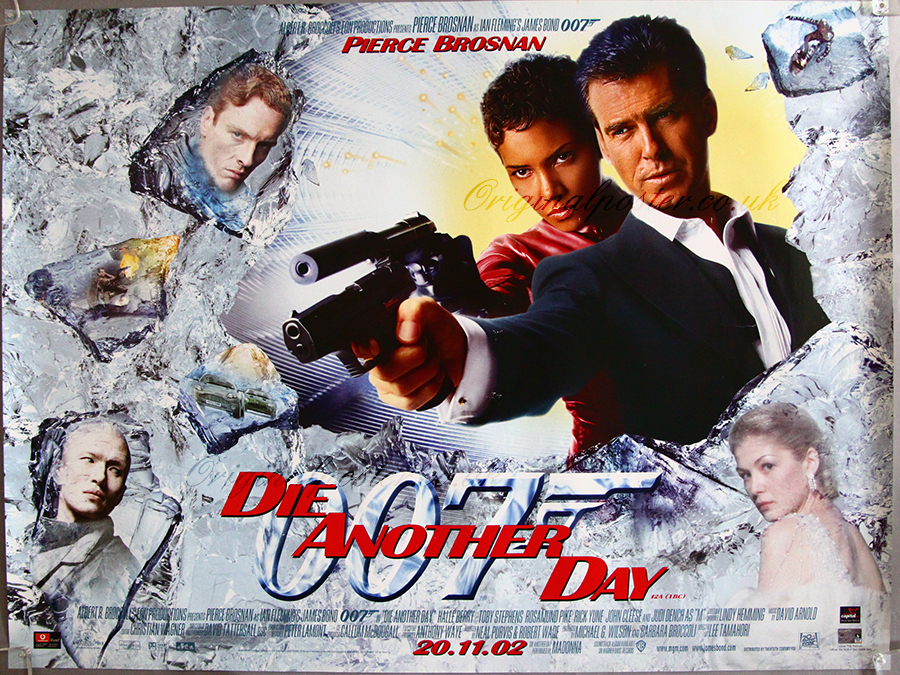
Of [In]human #Bond_age_ #20: The Tortured Mind of James Bond: Die Another Day and the Fever Dream
by James David Patrick and Matt Finch
Bond fans will engage at great length in pleasant debate regarding their favorite Bond film. They will champion GoldenEye as their favorite feature while also conceding to a fellow conversant that From Russia With Love is also a respectable choice, despite wholehearted disagreement. There’s an unspoken respect between Bond fans. You like Bond. I like Bond. Let’s be BFFs (Bond fans forever, obviously). It’s secret rule of Bond appreciation 1.97.C-35. Fellow Bond fans can like any Bond movie with impunity.
Tongues of Bond fans become more silver-tipped when discussing their least favorite Bond film. Bad Bonds slept with your mother, rubbed lemon juice in your paper cuts, took the last radish from the crudité. The danger here isn’t crucifying a Bond that someone loves (See subsection 4 under rule 1.97.C-35: Every Bond film has something “objectively lacking”). The danger is nothating a particular Bond movie enough. Oddly, this isn’t covered by one of the unwritten laws or subsections. Pick Diamonds Are Forever as your least favorite pick, prepare for hostility.
“Octopussy! The clown suit!”
“The World Is Not Enough. Christmas f’ing Jones!”
“Misogyny AND racism! Live and Let Die!”
Still, there’s one Bond that passes almost any Bad Bond litmus test. And that movie, as you might expect, is Die Another Day. I’ve been talking Bond on Twitter for a long damn time now. There’s one assertion that’s never, ever met with much resistance (I say “much” because that bold Bond fan Michael Cavacini remains on the front line of DAD defense – he’s the frontline, the entire army and commanding officer). Let’s get one thing out of the way before we go any further. Die Another Day is subjectively and objectively the least good James Bond movie. That’s called being diplomatic. Even those that have a more favorable opinion of the film accept that the movie represents a significant transgression in the Bond canon.
But a transgression from what exactly? Bond movies have always performed a tenuous tightrope act – the balance between the real and the surreal. Consider the titles that most often come up in the battles of the worst Bonds: Moonraker. Octopussy. A View to a Kill. Die Another Day. What do they all have in common? The movies most often deemed “the worst” overstep the bounds of acceptable suspension of disbelief. They lose the grounded reality of a British intelligence officer investigating threats to Western interests.